A Call to Safeguard Nigeria’s Most Vulnerable
A child who enters government custody does not lose the right to dignity, safety or life.
The deaths of 37 suspected artisanal miners in the custody of the Nigeria Security and Civil Defence Corps (NSCDC) in Minna, Niger State, have raised painful questions that Nigeria must not allow to disappear with the news cycle.
Among the deceased were teenagers. Niger State Governor Mohammed Umaru Bago said many of those who died were between 14 and 18 years old. Reports have also identified a seven-year-old among those who died.
The fact that these were children remains at the centre of the national conversation.
The young people had reportedly been arrested during operations against suspected illegal mining. According to the governor, 67 detainees were held in a cell before 37 died. Survivors have described the room as extremely small and poorly ventilated. Reuters reported that survivors estimated the cell at about 5 square metres, with nearly 70 people eventually crowded inside.
There are also allegations that an unidentified substance was sprayed inside the cell shortly before people began experiencing breathing difficulties and collapsing.
Those allegations require a rigorous forensic investigation. The substance has not been publicly established, and the precise cause of death had not been conclusively determined when these reports were published. The NSCDC initially suggested a possible disease outbreak, while government officials subsequently said overcrowding, suffocation and possible exposure to hazardous substances were among the issues being investigated.
That uncertainty makes an independent investigation even more important.
But why the children were there in the first place? is another question we must confront.
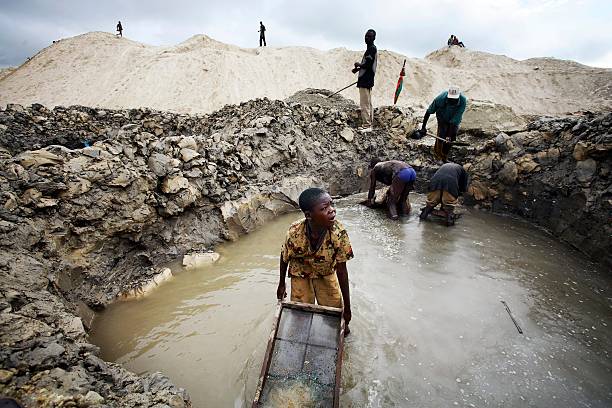
Why should under-aged children be working in mines?
A 12-year-old and a 17-year-old should be thinking about school, skills, friendships and their future—not how much gold they can find to help their families survive.
Recent reporting from Niger State illustrates the economic pressures surrounding artisanal mining. Business Day reported the case of a 17-year-old and his 12-year-old brother who had gone into gold mining because their father was ill and the family depended on them for his medication.
This is the deeper crisis.
When poverty becomes so severe that children are pushed into hazardous work to feed themselves or support their families, society has already failed to protect them.
Child labour is not simply an individual family’s problem. It is connected to poverty, limited access to education, weak social protection and economic vulnerability.
The appropriate response must therefore include enforcement—but also protection, rehabilitation and opportunity.
A Child should not be treated an Adult Suspect:
If a child is found participating in illegal activity, the state’s responsibility should not begin and end with arrest because children require a child-sensitive justice response.
Their age, vulnerability, family circumstances, education and welfare must be considered. Detention should never become an automatic response to children’s involvement in activities driven by poverty or exploitation.
International child-protection principles emphasize that detention of children should be used only as a measure of last resort and for the shortest appropriate period.
That principle matters because a child who enters the justice system remains a child.
Even where authorities have legitimate reasons to investigate illegal mining, a 14-year-old, 16-year-old or 17-year-old should not simply be treated as an adult suspect and placed in an overcrowded detention environment.
The question should be:
What happened to this child, and what does this child need? Not simply, what offence did this child commit? The Cell Raises Serious Questions and the reports surrounding the Minna deaths demand answers.
How many people were placed in the cell? What was its capacity? What ventilation was available? Were detainees provided with sufficient water, food and medical attention?
Were children separated from adults and were officers monitoring the detainees?
When people complained about heat and overcrowding, what action was taken?
And most urgently, what substance, if any, was released into the cell and who authorized it, why was it used?
Survivors told journalists that an unidentified substance resembling perfume was sprayed into the crowded room shortly before people began struggling to breathe. Reuters reported similar accounts from multiple survivors but noted that it could not independently establish what substance had been sprayed or why.
These questions should be answered by forensic evidence—not speculation.
The government has ordered an investigation, and senior NSCDC personnel have been suspended. A transparent process should now establish the facts, identify responsibility where wrongdoing is proven and ensure that evidence is preserved.
Safeguarding Must Begin Before a Child Is Arrested
This tragedy should also force Nigeria to rethink how vulnerable children are identified.
If a child is found at a mining site, the first question should include whether the child is being exploited, whether the child is out of school, whether the family is experiencing extreme poverty and whether the child needs immediate protection. That does not mean ignoring the law, rather It means enforcing the law in a way that recognizes childhood.
Government should establish clear protocols for identifying minors during mining-enforcement operations. Children should be referred to appropriate child-protection and justice authorities, separated from adult detainees where detention is unavoidable, medically assessed and connected to their families and education whenever appropriate.
Poverty cannot be ignored if Nigeria wants to reduce child labour in mining, neither can arrest alone solve the problem. A hungry child may return to the same dangerous environment after release. Government must strengthen social protection for extremely poor families, expand access to education, support vulnerable households and ensure that children in mining communities have realistic alternatives.
Every school bag provided, every child returned to school, every vulnerable family supported and every community given sustainable economic opportunities can reduce the pressure that pushes children into hazardous work.
What We Must Demand:
The deaths in Minna should lead to concrete action.
A transparent and independent investigation into every circumstance surrounding the deaths.
Full forensic examination of available evidence to establish the causes of death.
Accountability if negligence, abuse or unlawful conduct is established.
Child-sensitive enforcement procedures during mining and other security operations.
An absolute separation of children from adult detainees where detention is legally unavoidable.
Safe, humane detention conditions, including adequate space, ventilation, water, food and medical care.
Immediate child-protection assessments whenever minors are found in hazardous work.
Greater investment in education and social protection in communities where poverty drives children into dangerous labour.
And perhaps most importantly, we must change the way we see vulnerable children.
They are not disposables or mere statistics. Neither are they merely “illegal miners.” They are children and we must treat them as such. Nigeria cannot build a secure future while children are forced to choose between hunger and hazardous labour, or while children who come into contact with the justice system are exposed to conditions that put their lives at risk.
The 37 deaths in Niger State should therefore become more than a tragic headline and also a turning point. A country is judged not only by how it treats those who are powerful, educated or wealthy, but by how it protects those who are most vulnerable.
At Grace-To-Inspire, we believe that every child deserves to be safe, educated, protected and treated with dignity. We must protect children before they enter dangerous mines as well as when they come into contact with law enforcement.
We must also protect them when poverty makes them vulnerable. Children belong in schools, families and safe communities—not in overcrowded cells where their lives can be placed at risk