“Every child deserves the opportunity to learn, grow and thrive.”
Education is more than sitting in a classroom, passing examinations or receiving a certificate. For a child, education can be a pathway to opportunity, confidence, independence and a more secure future. It gives children the knowledge and skills to understand their world, make informed decisions, develop their abilities and participate meaningfully in society.
Yet for millions of children, the opportunity to attend school and learn remains out of reach.
Nigeria’s Education Challenge:
Nigeria continues to face a significant education access and learning crisis. UNICEF reports that about 10.5 million children aged 5–14 are out of school, while only about 67% of children of primary-school age regularly attend school. Attendance falls further at lower secondary level, where UNICEF data puts the adjusted net attendance rate at about 45%.
The challenge is not simply getting children through the school gate. Learning outcomes also remain a serious concern. A recent UNICEF Nigeria report notes that in 2022, 49% of Primary 3 learners, 67% of Primary 5 learners and 86% of Junior Secondary 2 learners did not reach minimum proficiency in mathematics. It also reports that about 30% of learners who reached Junior Secondary 3 in 2021 lacked foundational reading skills expected to have been developed much earlier.
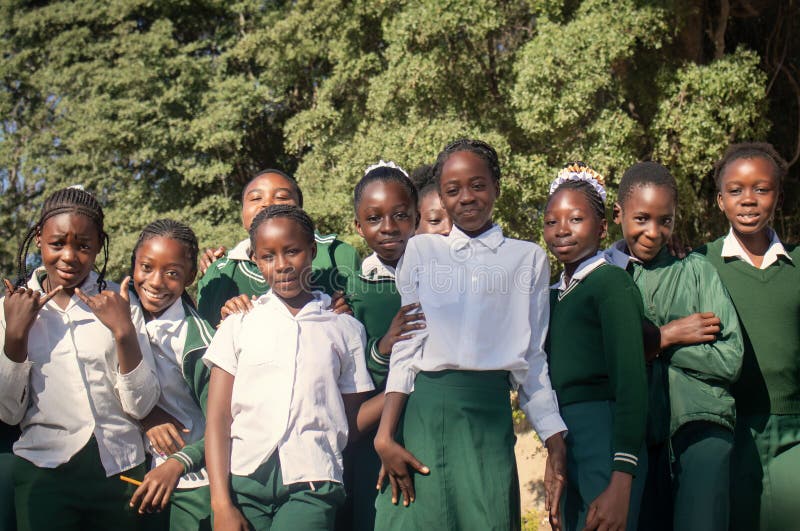
These numbers represent children—not statistics alone. Behind every figure is a child with dreams, abilities and potential.
Why Do Children Remain Out of School?
There is no single reason why a child may not attend school.
Poverty remains an important barrier. Families struggling to meet basic needs may find it difficult to provide school uniforms, books, bags, shoes, transportation and other educational necessities. For some children, financial hardship can push them into work or other responsibilities instead of school.
Conflict and displacement can make the situation even more difficult. UNICEF’s 2025 humanitarian reporting, for example, documented large numbers of school-age children in displaced and conflict-affected communities who were not enrolled in school. In parts of the Northeast and Northwest, insecurity, displacement, flooding and damaged schools have disrupted children’s education.
Gender, geography, disability, family circumstances and access to safe learning environments can also influence whether children enter school, remain there and complete their education. UNICEF’s data shows particularly low attendance among girls in some northern states.
Education Is About More Than School Attendance
Getting a child into school is an important first step—but access must also mean meaningful learning in a safe and supportive environment.
A child needs teachers who can teach effectively, learning materials, safe classrooms, supportive adults and an environment where they can ask questions and develop confidence.
Education can also help children develop important life skills: communication, problem-solving, emotional awareness, critical thinking, leadership and resilience.
For adolescents especially, education should not ignore their emotional and social wellbeing. Young people need opportunities to understand themselves, manage challenges, develop healthy relationships and make responsible decisions about their futures.
Every Child Has Potential
A child’s circumstances should not determine the limits of their future.
A child growing up in poverty can become a teacher, engineer, entrepreneur, social worker, doctor, artist or community leader. A child who has experienced displacement can still dream. A child who struggles academically can still discover a strength in another area. A child who has never owned a school bag can still carry extraordinary potential.
This is why educational support matters.
UNICEF’s 2025 reporting shows that meaningful progress is possible. With government and partner support, more than 1.5 million children in Nigeria were reached with formal and non-formal education opportunities during 2025, including approximately 166,700 children who were out of school and enrolled in formal schools for the first time.
These efforts demonstrate that barriers can be reduced when communities, governments, organizations and individuals work together.
What Can We Do?
Ensuring that every child has access to education is a shared responsibility.
Governments must continue investing in quality education, teachers, infrastructure and inclusive policies. Communities can help identify vulnerable children and support safe learning environments. Schools can provide nurturing spaces where children feel respected and encouraged. Parents and caregivers can support children’s learning and wellbeing.
Nonprofit organizations and development partners can complement these efforts by reaching children who are particularly vulnerable and providing targeted support.
Sometimes the intervention may be a school uniform. Sometimes it may be a school bag, books, writing materials or school fees. For another child, it may be mentorship, emotional support, a safe conversation or an opportunity to participate in a leadership program.
A relatively small intervention can remove a significant barrier.
At Grace-To-Inspire, We Believe Every Child Matters, we believe that every child deserves the opportunity to learn, grow and thrive—regardless of their background or circumstances.
Through initiatives such as Project Equip, we seek to support vulnerable children with educational resources, mentorship, emotional intelligence, adolescent mental health, leadership and resilience-building opportunities.
Because education is not merely about preparing children for examinations.
It is about preparing them for life.
When we help a child stay in school, we are not simply providing a book, a uniform or a school bag. We are helping to open a door.
And behind that door may be a dream, a talent, a future career, a family transformed and a community strengthened.
Every child deserves that opportunity.
Every Child Deserves an Education.
Every Child Deserves a Chance.
Every Child Deserves the Opportunity to Thrive.